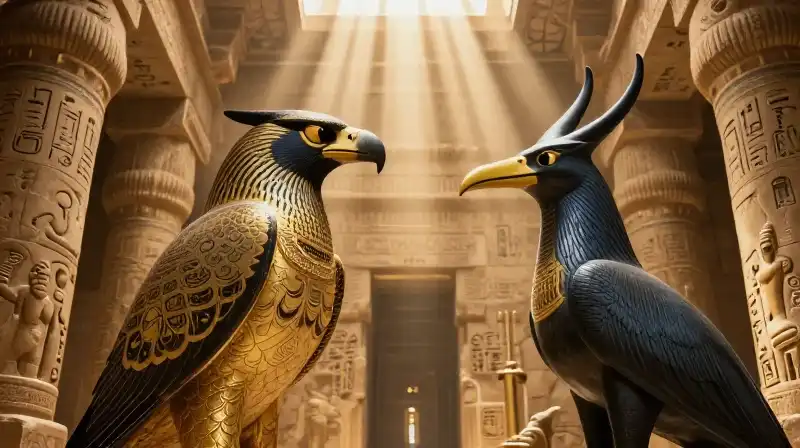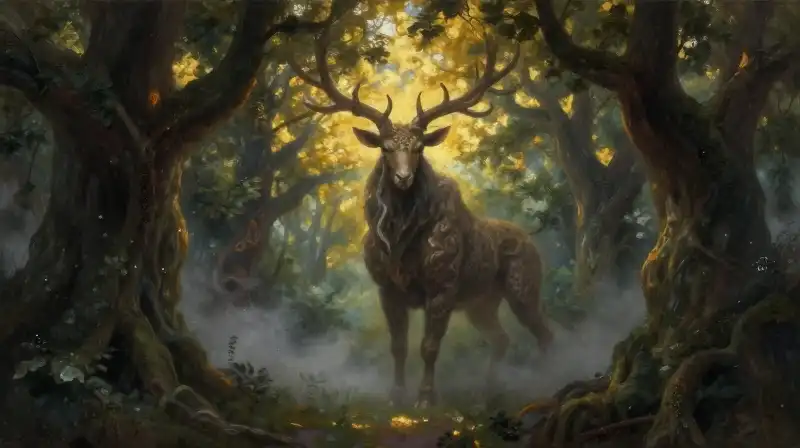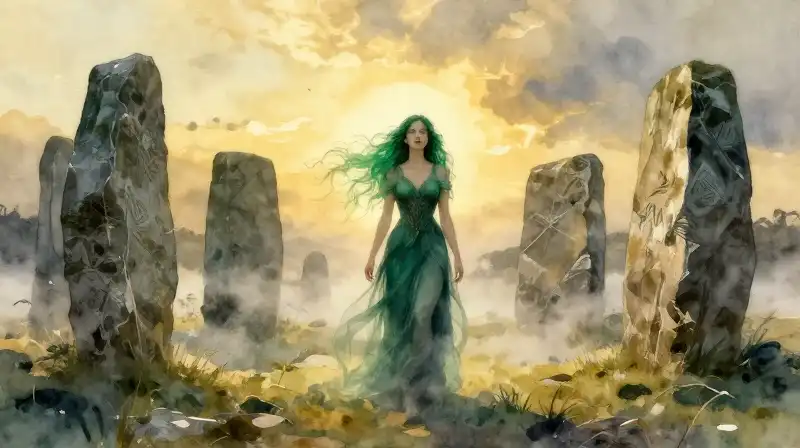
Cernunnos: The Ancient Celtic God of the Forest and Wild Woods

Introduction
Cernunnos is not merely another deity found in historical texts; he embodies the untamed heart of the earth and the deep, cyclical energies of the ancient wild wood. For readers seeking to understand the heritage of the Celtic world, he represents the sacred balance between the ordered world of human civilization and the chaotic, fecund vitality of nature. Fundamentally, Cernunnos is revered as the “Horned God of the Animals”—a figure that possesses a powerful, fundamental energy that is distinctly non-human, despite being depicted in a human guise. He is the quintessential Celtic forest god, a guardian of the sacred spaces where the modern world yields to primal instinct. When considering Cernunnos, it is essential to move past a simple definition. He is a complex figure—a fusion of fertility, hunt, and the cosmic duality of life and decay. Whether one encounters him in northern Gaul, across Italy, or in Denmark, the presence of the horned, antlered figure serves as the conventional marker used to apply his name to these varied images 1. His cult’s attestations stretch back as far as the 4th century BCE, demonstrating the enduring power of his presence within the ancient landscape.
The Iconography of the Wild Beast
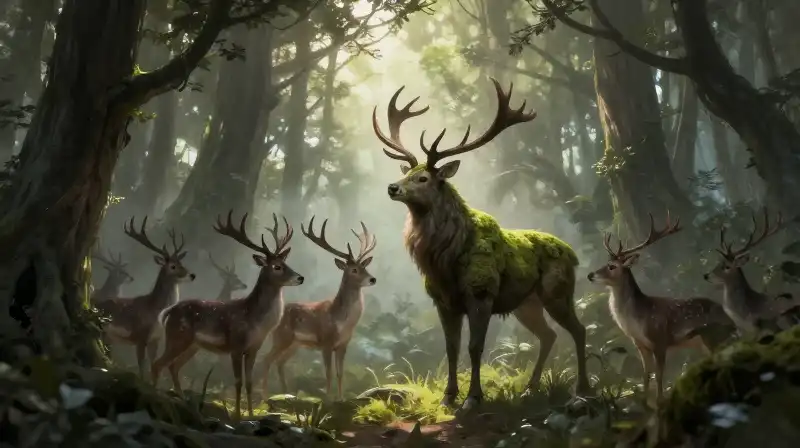
The visual language of Cernunnos is immediately recognizable. Iconographically, the character is defined by a specific cluster of attributes that immediately signal his connection to the natural world. He is often shown seated, sometimes with crossed legs, and is typically adorned with torcs and symbols of the wild. His most frequent companions are the animals of the forest, with the deer holding a particularly central place. Furthermore, depictions often include ram-horned serpents and a general aura of fierce wildness 1. It is worth noting that while these images are consistent across vast geographical areas, the exact definition of a “universal” Cernunnos cluster has been subject to scholarly debate 1. This complexity shows that while his core attributes (antlers, animals) remained vital, the way communities in different regions expressed him changed over time. However, the presence of the uniquely horned, antlered figure remains the standard identifier for those seeking to understand this particular deity. The name itself offers a glimpse into the cultural mindset of the communities who revered him. Some interpretations suggest his name may derive from proto-Celtic roots meaning “angle” or “excrescence,” possibly referencing the deer-like crown or horns that defined his appearance 1.
The Cycle of Life and Death
Cernunnos’s profound significance lies in his embodiment of cosmic duality. He is the embodiment of cyclical time, which governs the cycles of seasons, life, and death. This is perhaps most clearly seen in his identification with the “Green Man.” The Green Man represents the spreading treetops and the untamed vegetation of the ancient forests, symbolizing a vibrant, flourishing life found in spring and summer 1. Yet, Cernunnos is not solely a celebration of growth and abundance. He also embodies the essential “Dark One.” He is honored not only as the guardian of life but also as the figure presiding over the decay of autumn and winter 1. This transition into the darker half of the year transforms him into a more mysterious, powerful figure. Some interpretations view him as the “Dark Man” or an Underworld deity—a being who sings the souls of the dead and remains intimately linked to the deep, hidden forces of the earth. This duality—the vibrancy of the “Green Man” versus the somber mystery of the “Dark One”—allows Cernunnos to stand as a figure of profound balance, acknowledging that death is merely a transition within the greater life force of the wild wood 1.
The Call to the Wild Wood: Ritual and Regions
Connecting with Cernunnos requires a conscious departure from the structured, civilized world. The path to understanding and communing with the god is described as an experiential journey moving away from societal norms and into the heart of the Wild Wood, where instinct is believed to supersede logic 1. This emphasis on instinct and the “Wild Wood” makes Cernunnos a potent symbol of the individual’s relationship with nature. The characteristics of Cernunnos can sometimes be compared to figures like the Greek Satyr Pan, as both represent a wild, often erotic, and “All Devourer” nature. However, Cernunnos is specifically tied to the concept of the ancient forest and its inherent, untamed power 1. Regional traditions also hold varied names for this powerful figure. While the pillar figure is most commonly identified as Cernunnos, local variations and attestations suggest names such as Carnonos, Karnomou, or Deo Ceruninco 1. This regional variation highlights how deeply ingrained the reverence for the forest lived in the communities of the era, yet how local cultures chose to express that reverence through their specific traditions.
Synthesizing the Wild
Cernunnos ultimately stands as a symbol of the interconnectedness of all things—life, death, animal, and human. He is a reminder that the world is not composed of separate, neatly categorized parts, but is a unified, ancient, and endlessly repeating cycle. His story encourages a deeper look at the “ancient forest” not as a backdrop, but as a powerful, living entity that exists independently of human control or definition. To truly understand the culture that reveres Cernunnos, one must appreciate the respect given to the forces that lie beyond human logic. He offers a mirror to the wild, reminding the observer that in the deepest parts of the natural world, the balance between exuberant life and inevitable decay is the most sacred truth of all.
References
Footnotes
Frequently Asked Questions
Who is the Celtic god of the forest?
Cernunnos is described as the quintessential Celtic forest god, embodying the untamed heart of the earth and the deep, cyclical energies of the ancient wild wood. He is revered as a guardian of the sacred spaces where the modern world yields to primal instinct.
How to Connect with Cernunnos
Leave Structured Civilization
Require a conscious departure from the structured, civilized world to begin the journey.
Adhere to Instict Over Norm
Consciously move away from societal norms and civilized logic to enter the primal state.
Embrace the Wild Wood
Move into the heart of the Wild Wood where primal instincts are believed to supersede logic.
Related Articles