The History of Halloween: From Samhain to Modern Trick-or-Treat

Introduction
Halloween, or All Hallows’ Eve, exists at the fascinating intersection of ancient harvest rites, Christian theological observance, and centuries of cultural migration. It is far more than a seasonal celebration; it is a living tradition that reflects humanity’s enduring preoccupation with the cycle of life, death, and the relationship between the physical world and the spiritual realm. At its core, the observance marks the cusp between autumn and winter—a time when the veils between worlds are traditionally seen as thinning. To understand modern Halloween, one must trace this complex narrative from the spiritual practices of ancient Celts and Romans to the neighborhood gatherings of contemporary communities.
The Crossroads of Antiquity: From Samhain to All Hallows’ Day
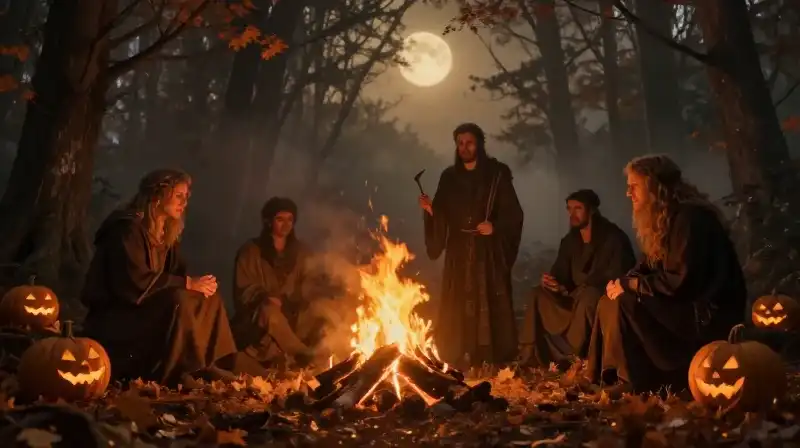
The foundational elements of this celebration lie in the pre-Christian traditions of the ancient Celts. Their most significant harvest festival, Samhain, is widely regarded as the primary influence on modern Halloween 1. Samhain was a pivotal date in the Celtic calendar, marking the end of the harvest season and the beginning of the dark, cold winter. During this time, the Celts believed the boundary between the world of the living and the spirit realm became porous 1. This belief shaped how they spent the night, as spirits were said to roam the earth until the new year. The concept of honoring those who have passed is also found in Mediterranean antiquity. Ancient Roman festivals, such as Lemuria and Parentalia, were occasions dedicated to commemorating the dead and offering provisions to restless souls 1. This shared cultural theme—commemorating the transition of life and death—demonstrates how different ancient communities independently arrived at traditions centered on honoring the departed. As Christianity expanded, these pre-existing practices intersected with new theological frameworks. The Church solidified the observance of All Saints’ Day (All Hallows’ Day) as a day dedicated to remembering martyrs and saints 1. The date of November 1st became particularly prominent in places like Northumbria and Ireland by 800, and it was eventually codified by the Frankish Empire in 835 1. While some cultural theories posit that the Church adopted and adapted Samhain to fit its new calendar, others suggest that both traditions developed alongside each other, with both the pagan and Christian elements evolving into the recognizable celebration we know today 1.
The Evolution of Spirit and Costume
Many of the physical customs we associate with All Hallows’ Eve are steeped in historical reasoning intended to bridge the gap between the tangible and the spiritual. The ancient tradition of dressing in costumes may have originated from a specific cultural belief: that the souls of the departed wandered the earth and that wearing disguise was a necessary means to avoid recognition by potentially harmful or vengeful spirits 1. During the Middle Ages, some churches addressed the challenges of not having many sacred relics on display by permitting parishioners to dress up as saints during Allhallowtide 1. This practice, where community members outwardly represented the hallowed figures of the Church, demonstrates a cultural evolution that repurposed old communal dress customs into a religiously sanctioned tradition. Similarly, the early forms of the jack-o’-lantern were carried by these “soulers” in hollowed-out turnips, which were eventually replaced by the larger, carved versions used to ward off evil spirits.
From Souls to Souvenirs: The Rise of Trick-or-Treating
The tradition of “souling” provides a crucial link between the spiritual practices of the Middle Ages and the modern, playful exchange of treats. Souling was a practice, particularly in parts of England and the Low Countries, where poor individuals, often children, would go door-to-door during Allhallowtide. They would sing hymns and offer prayers for the dead in exchange for “soul cakes” 1. This custom represents a powerful blend of ritual, charity, and community engagement. While the cultural roots of souling are ancient, its specific migration to the modern United States is a story of diaspora. These customs, which originated primarily in Ireland and Scotland, were introduced to North America by immigrant communities starting in the 19th century 1. Over time, these rural, religiously-based practices began to transform into the recognizable, secular, and playful version of trick-or-treating. This shift led to the modern global observance of Halloween as a family-friendly cultural event 1.
Navigating the History: Belief, Religion, and Place
The history of Halloween is often the subject of intense debate, particularly regarding its religious origins and whether it is a recognized practice within any single faith.
Does the Bible mention Halloween?
The Bible does not specifically mention Halloween or All Hallows’ Eve, as the tradition is a product of later cultural syncretism between ancient pagan practices and Christian liturgical observances 1. It is understood as a tradition that evolved long after the texts were written, shaped by cultural integration rather than divine command.
Which religion belongs to Halloween?
No single religion “owns” Halloween; rather, the holiday is a cultural artifact of centuries of blending. It incorporates elements derived from:
- Ancient Celtic paganism (Samhain, focus on the spirit world).
- Ancient Roman traditions (commemorating the departed).
- Christianity (All Saints’ and All Souls’ Day, the concept of saints and the dead).
- Immigrant traditions (Souling, which led to modern trick-or-treating).
Today, for the majority of participants, it is celebrated as a secular cultural event that draws inspiration from its diverse historical roots.
Living Culture: The Modern Observance and Symbolism
In contemporary practice, Halloween functions as a vibrant annual ritual that allows communities to safely engage with their fears, heritage, and shared stories. The consumption of specific foods, such as apples, potato pancakes, and various soul cakes, dates back to the traditions in Ireland and Scotland and persists as part of the modern observance 1. The practice of abstaining from meat on All Hallows’ Eve, which manifested historically in the consumption of vegetarian foods, reflects a lingering connection to the spiritual nature of the holiday, even when celebrated in a contemporary, secular context 1. For those seeking to genuinely understand the tradition, recognizing Halloween as a “living culture” requires appreciating its layered nature. It is a complex blend of spiritual homage, cultural adaptation, and communal play. It serves as an opportunity for communities to acknowledge the darker, mysterious edges of the human experience—the cycle of birth and the certainty of death—through shared ritual and storytelling.
References
Footnotes
Frequently Asked Questions
Does the Bible mention Halloween?
The Bible does not specifically mention Halloween or All Hallows Eve. The tradition is understood to be a product of later cultural syncretism between ancient pagan practices and Christian liturgical observances, evolving long after the texts were written.
Related Articles