Chinese Dragons and Mythical Creatures: Symbolism and Cosmology

Introduction
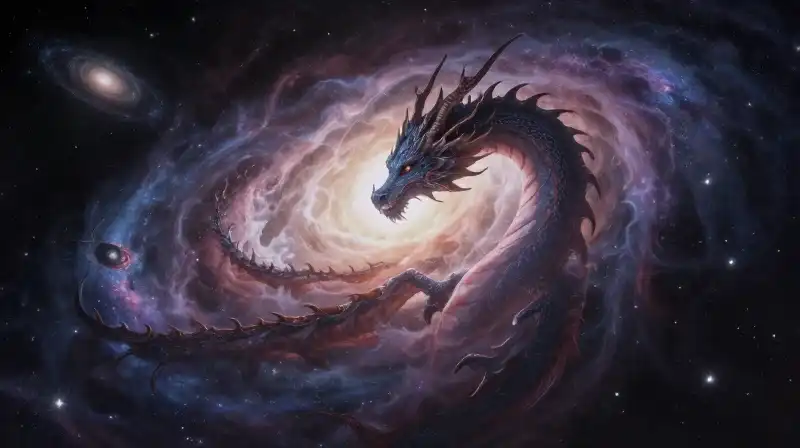
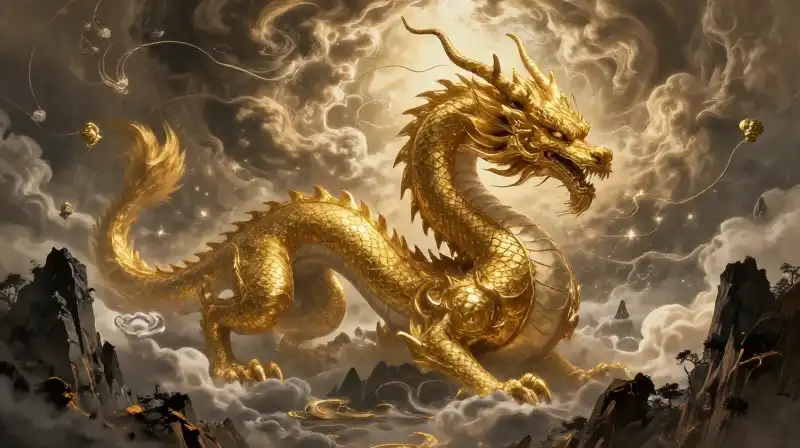
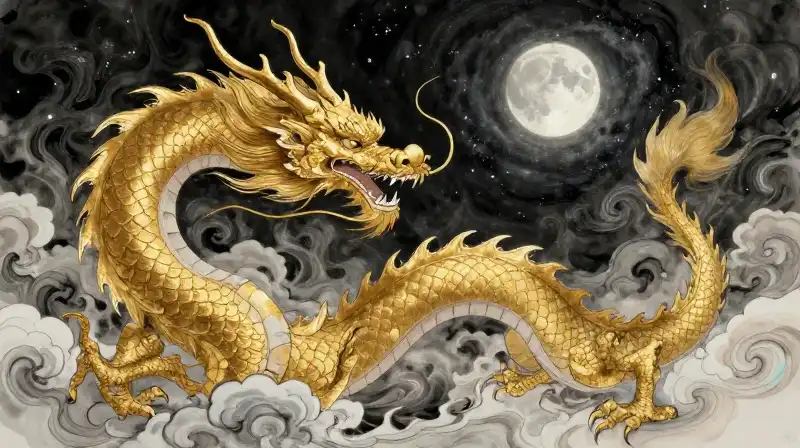
The myths and legendary creatures of China are not merely fantastical stories; they are a sophisticated visual and narrative code that underpins the country’s ancient cosmology and traditional worldview. To a reader seeking to genuinely understand the cultural landscape, the Chinese dragon—the *lóng*—differs fundamentally from its Western counterpart. While a European dragon often embodies chaotic, destructive fire, the Chinese Dragon is a chimeric creature of immense vitality, representing the harmonious balance of the cosmos and the imperial power of the Emperor 1. These figures, along with a pantheon of specialized mythical creatures, are essential to the understanding of Chinese history, art, and the enduring tradition of the natural cycle. This tradition is rooted in the ancient Chinese belief systems where nature, power, and human endeavor are inextricably linked. Mythological beings were not viewed as alien entities, but as powerful manifestations of elemental forces, seasons, and virtues. To interpret the Chinese mythological bestiary is to understand a highly organized, symbolic universe where every beast has a place and a specific function within the grand cycle of existence.
The Cosmic Balance: Yin, Yang, and the Celestial Court
At the heart of Chinese cosmology lies the concept of balance—the relationship between opposing forces that create a dynamic whole. The most prominent illustration of this is the pairing of the Dragon and the Phoenix (*Fènghuáng*). The Dragon serves as the archetype of Yang energy, representing the imperial authority of the Emperor and the mastery over dynamic natural forces, particularly water and weather 1. Conversely, the Phoenix represents Yin, embodying femininity, virtue, and celestial grace 1. This relationship is crucial to the narrative of Chinese life. The Fenghuang’s symbolic meaning has evolved over time, shifting from an ancient, unified concept into a primary symbol of Yin and the Empress, serving as the perfect, complementary counterpart to the ruling Dragon 1. Together, they embody the ideal of perfect harmony—the union of the forceful, assertive masculine energy and the graceful, nurturing feminine energy that defines a balanced society.
Mapping the Cosmos: The Four Divine Beasts
The organized nature of Chinese cosmology is anchored by the Four Divine Beasts (*Sì Shénshòu*), a group of symbolic animals that map the cardinal directions, the elements, and the seasons. These creatures provide a framework for understanding the fundamental forces shaping the world:
- The Azure Dragon (East): Associated with the Wood element and the vibrant energy of Spring, representing growth and dynamic power 1.
- The White Tiger (West): Linked to the Metal element and the quiet intensity of Autumn.
- The Black Tortoise (North): The *Xuánwǔ* (Black Tortoise) embodies Water and Winter, while also carrying a dual significance as the patron of the warrior god Xuanwu 1.
- The Vermilion Bird (South): Representing the Fire element and the warmth of Summer.
These four beasts are placed in a continuous cycle, mirroring the flow of time and the rotation of the seasons. This belief allows the ancients to understand the world not as static terrain, but as a living, breathing system constantly in flux, governed by these specific elemental forces.
Archetypes of Power: The Specialized Bestiary
While the Dragon is the dominant figure, the Chinese mythological bestiary includes many specialized creatures, each tasked with a specific role in upholding the order of the universe or embodying specific traits of strength. These creatures demonstrate the rich complexity of the tradition 1. * **The Yellow Dragon (*Huánglóng*):** This particular iteration of the dragon holds immense cultural weight, symbolizing the Center of the Universe. It is traditionally viewed as an incarnation of the Yellow Emperor, representing the pivot point of all energies and the cycle of the changing seasons 1. * **The Bixi:** A unique hybrid of the dragon and the tortoise, the Bixi is revered for its immense strength. Its powerful nature is most visibly tied to its ability to carry massive ritual objects, such as stone steles, in religious ceremonies 1. * **The Qilin:** Though not specifically detailed in the provided summary, the Qilin is often ranked among the Four Auspicious Beasts alongside the Dragon and Phoenix, representing auspiciousness and peace 1. * **Other Catalogued Beings:** Traditional bestiaries also catalog creatures like the *Xishanjing* and the *Zhuyan Apes*, demonstrating the ancient impulse to classify every phenomenon, from divine beings to unique flora and fauna 1. These creatures collectively form a mythological hierarchy where the most auspicious beings, such as the Dragon and Phoenix, are traditionally considered the rulers over all other animals and phenomena 1.
Understanding the Myth: Cultural Significance and Living Practice
For a reader interested in these traditions, the key to genuine understanding is to view these creatures not as remote mythological figures, but as living symbols that inform contemporary art, ceremony, and cultural identity. The presence of these creatures reflects a culture that places high value on order, harmony, and the recognition of powerful energies. When people encounter the Nine Sons of the Dragon (*Lóng Shēng Jiǔzi*), which feature various hybrid forms—such as the *Suanni Lion* (a dragon-lion hybrid) and the Bixi—they are witnessing a literal representation of the boundless creative potential within the culture 1. These hybrids represent the diverse temperaments and functions that can arise from the powerful fusion of cosmic energies. The search for “Powerful mythical Chinese creatures” often leads to definitions, but in the context of *Living Culture*, the power lies in the symbol. The power of the Dragon is not simply brute force; it is the ability to bring rain, to govern the seasons, and to represent the ultimate legitimacy of the rule. This deep symbolic function is what gives these creatures enduring relevance to modern communities.
Conclusion: The Enduring Map of Meaning
The Chinese Dragon and its companions are far more than exotic illustrations; they are a complex cultural language. They offer an incredibly detailed map of the traditional Chinese understanding of the world—a world structured by elemental forces, balanced by cosmic opposites, and governed by both human authority and divine nature. To appreciate these creatures is to appreciate the sophisticated system of meaning that shaped a civilization, ensuring that the stories of the *lóng* and the *fèng* continue to shape community and understanding today.
References
Footnotes
Related Articles